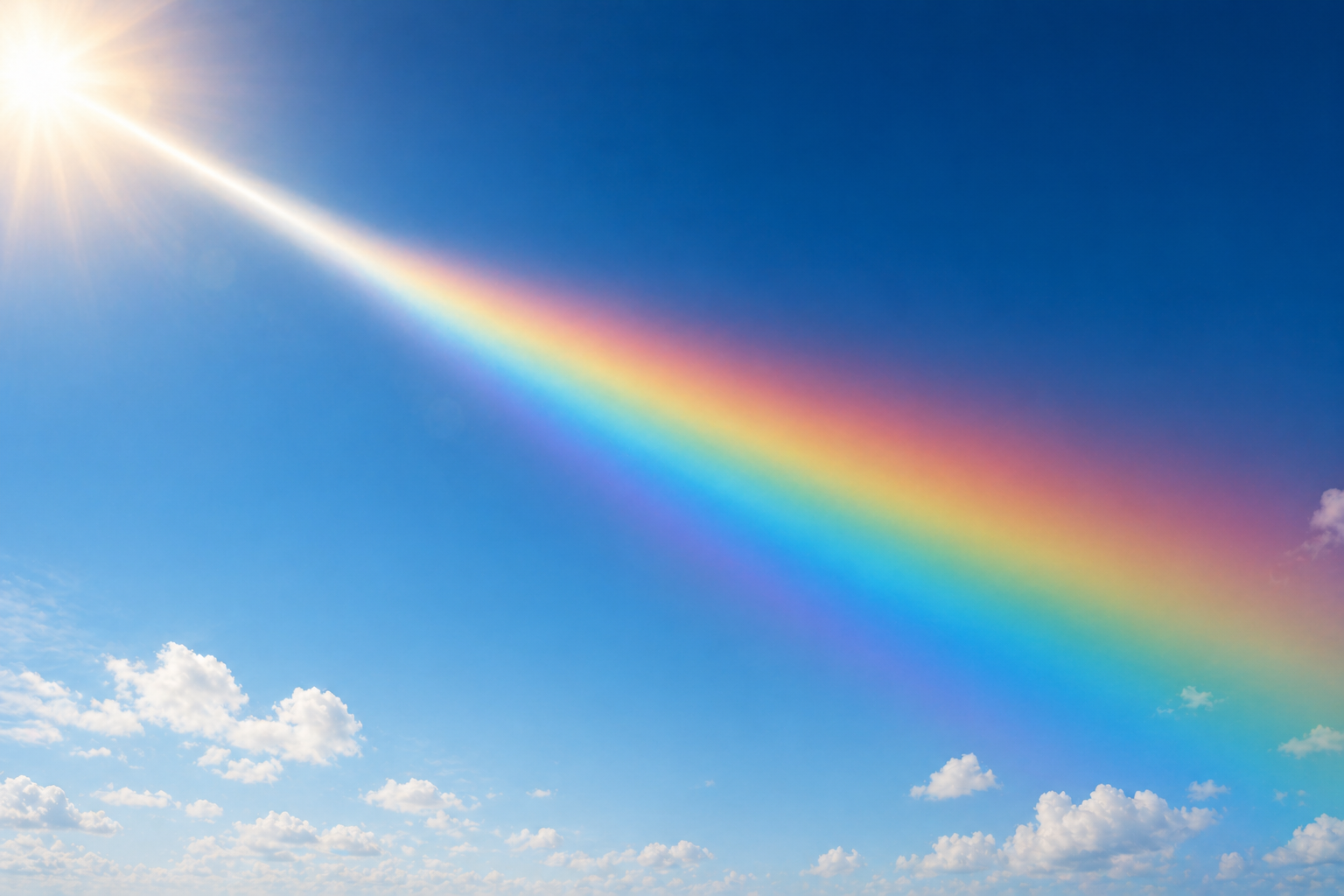
Why is the sky blue?
Why does the sky look blue on a clear day, but turn orange and red at sunset? It’s something we see all the time, yet there’s some fascinating physics behind…
On a clear day, the sky looks bright blue — something we see all the time but rarely stop to think about. It might seem simple, but there’s some clever physics behind it. The colour we see actually comes from how sunlight interacts with the gases in Earth’s atmosphere.
What is light made of?
Although sunlight appears white, it actually contains many colours. These colours make up the visible spectrum — red, orange, yellow, green, blue, indigo, and violet. Each colour has a different wavelength. Red light has longer wavelengths, while blue and violet light have shorter ones.
What does “scattering” actually mean?
As sunlight travels through the atmosphere, it doesn’t move straight through. Instead, it bumps into tiny particles in the air, such as gas molecules. These collisions cause the light to spread out in different directions. This spreading of light is called scattering.
Why does blue light scatter more than other colours?
Light with shorter wavelengths is scattered more easily than light with longer wavelengths. This means blue and violet light are scattered much more by the atmosphere than red or yellow light. Because of this, blue light is spread all across the sky, which is why the sky appears blue from any direction you look.

Why isn’t the sky violet instead of blue?
Violet light is scattered even more than blue light, so you might expect the sky to look violet. However, our eyes are less sensitive to violet light. Also, some of the violet light is absorbed by the upper atmosphere. This means the light that reaches our eyes is mostly blue.
Why does the sky change colour at sunset?
When the Sun is low in the sky, its light has to pass through more of the atmosphere before reaching us. As the light travels a greater distance, most of the blue light is scattered away before it reaches your eyes. What remains are the longer wavelengths, like red, orange, and yellow, giving sunsets their warm-looking hues.
Why do clouds look white if the sky is blue?
Clouds are made of much larger water droplets compared to the tiny particles in the air. These larger droplets scatter all colours of light more evenly. When all the combine, they appear white. This is why clouds usually look white or grey, even though the sky behind them is blue.
Summary
The sky appears blue because sunlight is scattered by tiny particles in the atmosphere. Shorter wavelengths, especially blue light, are scattered more strongly, spreading blue light across the sky. Changes in the Sun’s position and the size of the particles in the air can change how light is scattered, which is why the sky can show different colours at different times of day.
Did you know?
This blog was written by Laura Ash for Just Good Science
You must be logged in to post a comment.



Website and course built and managed by Web X Design Studio