
Why is the sky blue?
Why does the sky look blue on a clear day, but turn orange and red at sunset? It’s something we see all the time, yet there’s some fascinating physics behind…

The explanation
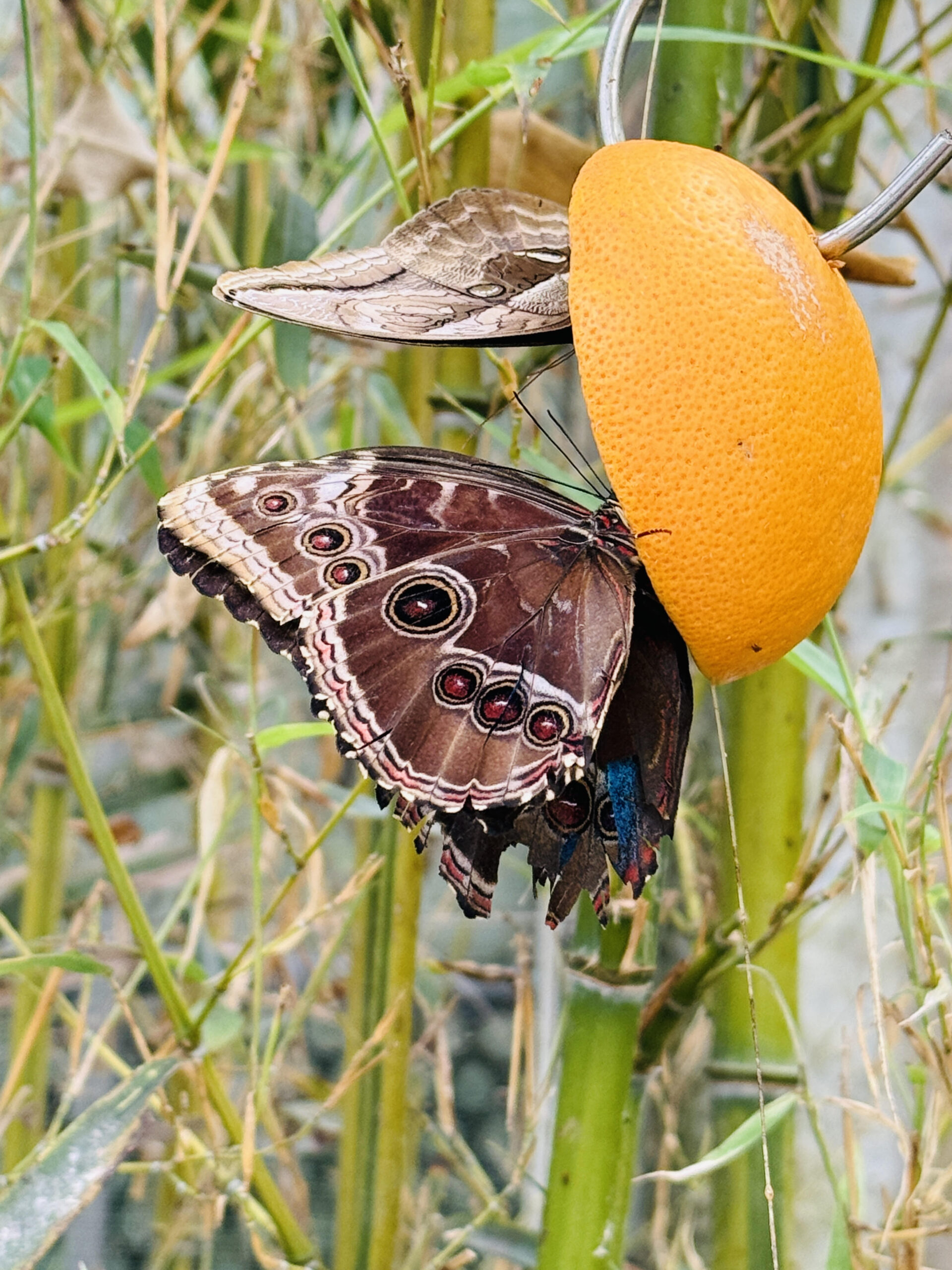
If you look closely at a butterfly, you can see that it has a clear left and right side and a flower repeats the same pattern all the way around. This is called symmetry, and it helps explain how living things survive in their environment. You might not notice it at first, but symmetry is one of the most common patterns found in nature.
What is the difference between radial and bilateral symmetry?
Bilateral symmetry means something can be split into two matching halves using one line down the middle, like a butterfly or a human body. Each side mirrors the other. Radial symmetry means something can be split into matching sections around a central point, like a flower or a jellyfish. In simple terms, bilateral symmetry is “left and right,” while radial symmetry is “around a centre.” A useful way to picture this is to imagine slicing a cake — radial symmetry would give you equal slices no matter how you cut through the centre.
Why are butterflies symmetrical?
Butterflies have bilateral symmetry because their bodies are built for movement in one main direction. Their wings and body are arranged evenly on both sides, helping them stay balanced as they fly. This also helps them steer and change direction quickly in the air. Even small differences between the two sides could make flying more difficult, so this balanced design is important.
Why are flowers symmetrical?
Flowers are symmetrical because they need to work from any direction. Their petals are arranged around a centre, so pollinators such as bees can approach from any angle. This increases the chances of pollination, which is essential for reproduction. Some flowers even use bright colours and patterns to guide insects toward the centre.
Why do flowers have radial symmetry?
Flowers have radial symmetry because they are fixed in one place. This design makes it easier for pollinators to land and collect nectar from any direction. Since flowers cannot move to attract attention, their structure helps them interact with their environment as effectively as possible.

Why do animals have bilateral symmetry?
Animals have bilateral symmetry because it supports movement. Most animals travel through their environment to find food or escape danger and having a left and right side helps organise the body for this. It also allows animals to have a clear front end, where important senses like eyes and a mouth are often found.
Why do most animals have left and right sides?
Having left and right sides allows animals to move in a controlled and coordinated way. Muscles can work in pairs, helping with balance and stability. This also makes actions like walking, running, or swimming more efficient and predictable.
Does symmetry affect movement?
Yes, symmetry affects movement. Bilateral symmetry helps animals move forwards in a straight line and stay balanced, making movement smoother and more efficient. It also helps animals adjust their movement quickly, which can be important when avoiding danger or catching prey.
How does symmetry help animals survive?
Symmetry helps animals survive by improving movement and control. This makes it easier to find food, escape predators, and use energy efficiently. A well-balanced body also reduces strain, allowing animals to move for longer without tiring as quickly.
Why are stationary organisms often radially symmetrical?
Stationary organisms are often radially symmetrical because they interact with their environment from all directions. Since they cannot move, this allows them to collect food and respond to changes around them more efficiently. For example, a sea anemone can catch food drifting past from any direction, not just from one side.
Summary
Butterflies and most animals have bilateral symmetry because it supports movement and control. Flowers and other stationary organisms have radial symmetry because it allows them to function equally well from all directions. Symmetry is closely linked to how living things survive, and it helps explain why nature is full of repeated patterns.
Did you know?
This post was written by Laura Ash for Just Good Science
You must be logged in to post a comment.






Website and course built and managed by Web X Design Studio